Showing posts with label Morimichi Takagi. Show all posts

Monday, May 23, 2022

Calbee Home Run Cards


I picked up this card on Yahoo Auctions the other day and I'm really pleased with it.

Its from one of the extraordinarily difficult to keep track of sets that Calbee put out in 1978.  Its difficult because the cards are not numbered and were issued in ten series that have slightly differing designs.  There still does not exist a complete checklist of all of them (Engel's guide explicitly states that all of the cards are not known, and in Japanese Sports Card Magazine never even bothered trying).  

This card I picked up is from the "Pennant Race" series and features Dragon's Hall of Famer Morimichi Takagi sliding into home in a game on April 2nd of 1978 (given how early in the season one wonders why they would include it in a series about a supposed pennant race, but I digress). 

I love the action photo, with Morimichi's grimaced face captured in perfect detail, and the umpire looking on about to call him safe (presumably).  

The back of the card is also quite neat though.  Its not the normal back of this card, but rather a Home Run card back:

In the 1970s, like today, Calbee would run contests to give away prizes.  Today these come in the form of "Lucky Cards" which you can send in to redeem for a prize.  Back then, they would just change the backs of some cards from the regular design to a Home Run card design, which you could send in to redeem for the prize.  The prize you could win for this one would be either a mascot bat with a printed signature, a card album, a baseball fan book or, if you collected three of them, a ball with a printed signature on it.

Since only a small number of any given card had a Home Run card back, and most of those were sent in to be redeemed as prizes back in the day, its really rare to find cards with Home Run Card backs today and they are highly sought after by Japanese collectors.  I was only able to score this one by chance, the seller wasn't a card dealer and hadn't noted the fact that it was a home run card in the description so it flew under everyone else's radar.  Score for me:)

Sunday, June 14, 2020

The Calbee Regionals Part 2: Tokai

 In this post we'll take a look at the Calbee regionals that were issued here in the Tokai region. Starting here makes sense both because I live in the Tokai region and because a lot of regional series were released by Calbee here over the years.

The Region

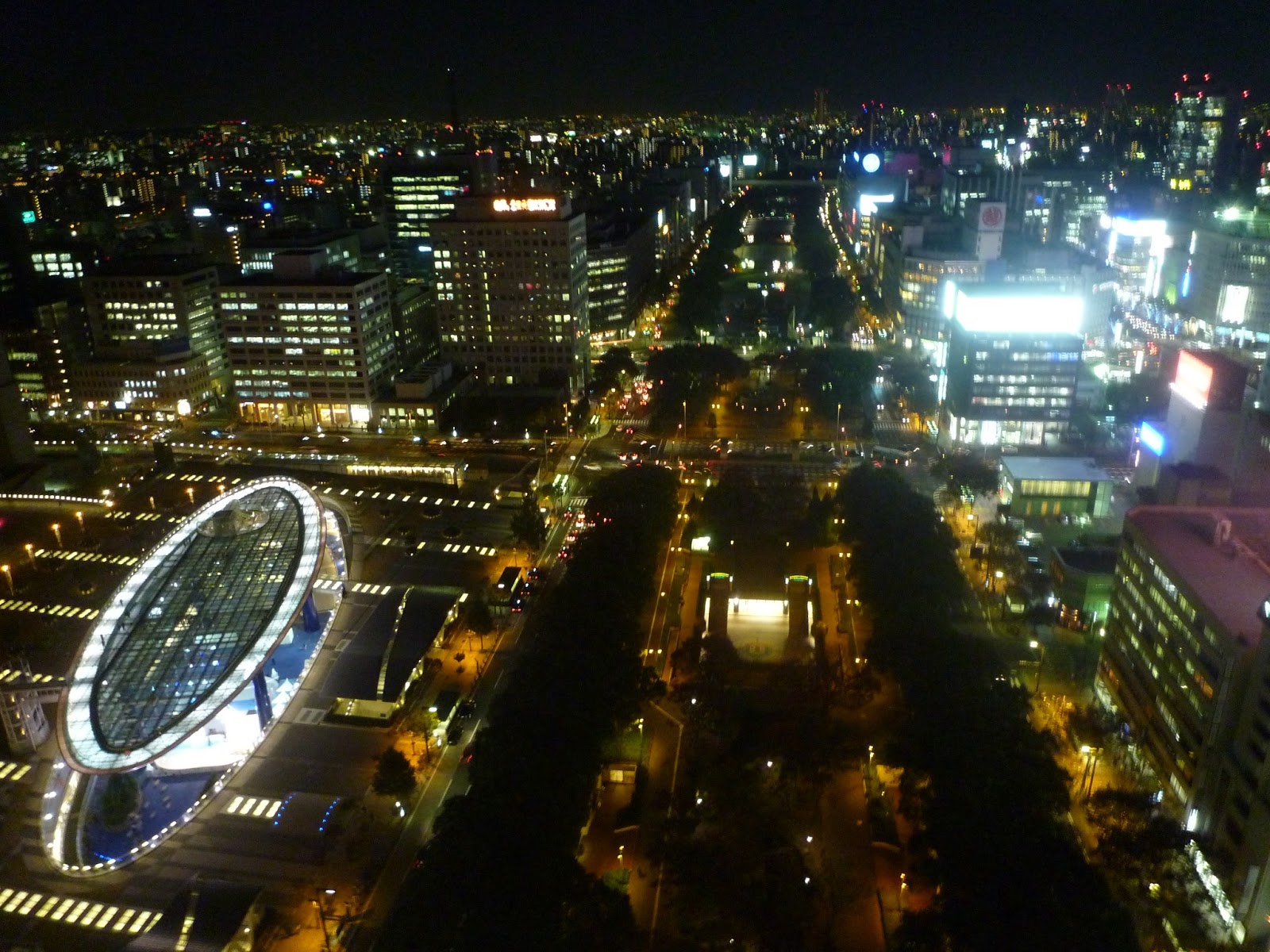
Tokai is centred on the city of Nagoya, home of the Chunichi Dragons.  With about 10 million people living in Nagoya and its suburbs its Japan's third largest urban area.

The city has kind of a bad wrap as an ugly, grey industrial blight on the landscape.  Actually its a fairly well earned wrap.  This for example is the type of scenery that accompanies your typical Nagoya wedding hall.

Its not all bad though.  The Osu area has some cool side streets with lots of neat shops that are fun to stroll through
The TV Tower is kind of a neat landmark too:
It was actually destroyed by Godzilla in 1964, a fact which very few landmarks can boast of:

Its also got a castle and the tallest train station in the world.  Its hard to believe but this city actually has a long history which has unfortunately mostly been bulldozed out of existence.  But the same can be said of pretty much any Japanese city so I wouldn't hold it against Nagoya too much. 

It is also the location where most of Mr. Baseball was filmed.  So Tom Selleck spent a bit of time here shortly after Magnum P.I. ended, which is sort of neat if you think about it.


The Calbee Tokai Series

As far as I can tell, Calbee released six series between 1973 and 1984 exclusively in the Tokai region.  Some of these are extremely hard to find.

1973 Calbee

Cards #210 to 236 of the 1973 Calbee set were only released in the Tokai area.  They feature Dragons players including Hall of Famers Morimichi Takagi and Senichi Hoshino.  It also features a manager card of Wally Yonomine, which I think is the only Calbee cards of his ever produced.

This is one of the hardest series from one of the hardest sets out there to collect.  There are probably only a few dozen copies of each card still in existence and since this is probably the most popular set among vintage Calbee collectors, prices are quite high - even the common cards are worth over $100 each.  There is a copy of the Yonamine card for 56,500 Yen (about $500 US) on Yahoo auctions right now.

The high prices have kept me from going after the cards from this series, but they are pretty cool.

1974-75 Calbee

The 1974-75 Calbee set is one I don't write about too much since I'm not actively pursuing it, but I do have a small collection of them on the go which I add to from time to time.  Its a 935 card set so quite big, and two of the series in it were only issued in the Tokai area.

The first (which came out in 1974) runs from card #73 to 90, featuring Dragons players including Tagaki, Hoshino and Yazawa.  These are pretty rare too.  There are only two cards from this series available on Yahoo Auctions right now, which is even fewer than for the 1973 series.  But prices are way cheaper, singles seem to go for between $10 and $20 each or so.  I'm guessing the lower price is probably attributable to fewer collectors trying to piece this set together.

The second (which came out in 1975) runs from card #792 to 827 and basically has the same player selection.  These seem to be a bit less rare than the lower numbered series since there are more than a dozen singles from it available right now.  The price range is about the same, $10 to $20 each or so.

This is one of the things that makes the 1974-75 Calbee set a bit more do-able than the 1973 one, the regional issues haven't been priced into the stratosphere.

I have a couple of the higher number Tokai series in my collection, but I'm not actively adding them to my collection right now.

1975-76-77 Calbee

The "monster" set has one series from #37 to 72 which was released only in the Tokai region.  This is the only Tokai regional series that I have actually tried to collect since I'm working on the set, and I've written about it here before (here and here). At the moment I am just 14 cards short of finishing it up, and I have 2 of the 3 cards of Senischi Hoshino, which are the most valuable.

The cards from this series are about the same as the ones from 1974-75 in terms of rarity and price.  Actually the price may have gone up a bit as a direct result of me buying them.  When I started I was able to buy them in the $10 each range, but these days its hard to find them for under $20 and I think that is because of me.  When there are only a handful of cards available, one guy buying them up can have an outsized impact on the price.  Maybe when I'm finished the prices will go back down again!

1977 Calbee

In 1977 Calbee released a stand alone set (as opposed to a series within a larger set). This seems to have been released only in Nagoya city itself as opposed to the Tokai region as a whole as each card has the "Na" from "Nagoya" on it.  It is a 36 card set (Engel lists it as JC 5d) and unlike other Tokai area releases it features players from other teams as well as the Dragons.

This set is very rare and very expensive.  Prices on commons start at about $50 and there is a Willie Davis card which is going to set you back a lot (one is available on Yahoo Auctions right now for 30,000 Yen, about $300 US).

I don't have any of these cards and don't think I'll ever make a pass at that set!

1984 Calbee

After 1977 Calbee took a bit of a breather and didn't release another Tokai series until 1984.  That year cards numbered 641 to 690 in its main set were only released in the Tokai area and all feature Dragons players.

These cards are also pretty rare and expensive, there are a few available on Yahoo Auctions right now and the cheapest starting bid of any of them is 4,000 Yen (about $40).

The existence of this series and a significant number of other very expensive short printed series were a major factor in me putting aside my 1984 Calbee project.  I like the set with its distinctive look and I have about 200 cards from it, but there are about 200 or so short printed ones (of which the Tokai regionals represent about 1/4) which would set me back 50-100$ each for and there is no way I'm willing (or able) to spend that kind of money on it.  So I'm kind of debating whether to give it up completely or just go for the non-short printed ones, which are way more affordable.


Anyway, that concludes my summary of the Tokai regional issues.  Basically the ones from the 1974-75 and 1975-76-77 sets remain affordable (despite seeming to be about equally rare) while the ones from the other sets are all insanely expensive.

Monday, September 30, 2019

The Most Insanely Colorful Set of All Time: 1975 Pepsi Dragons Menko

 Today I present some cards from the 1975 Pepsi Dragons set (JCM 71).  It is the most colorful set of cards....or anything for that matter...that I have ever seen.  I feel I should probably have put a disclaimer at the top of the post warning that these cards may induce photosensitive epileptic seizures in some readers.  They are that insanely colorful.  They make the 1972 and 1975 Topps sets look like 1948 Bowmans.

I fell in love with this set a couple of years ago when I saw the first images of it online, but I hadn't been able to get any actual cards from it until recently.  Its a fairly rare set (Engel rates it R2) and was probably only issued in the Nagoya area (it only features Chunichi Dragons players).  Every once in a while a beat up little pile of them would show up on Yahoo Auctions with a high BIN price, but never anything enticing enough for me to buy one.  I waited so long I was getting tempted to splurge on one of the beat up ones just to have a single from the set though.

Then it happened.  An antique dealer (love em!) put a huge pile of them up for auction last week with a low starting bid and I scooped up an amazing find of these.  72 of them, almost all in minty condition!  What a haul!
 When I received them, most of them were wrapped in bundles of 8 like this:
Its pretty flimsy but I suspect this is how they were originally distributed.  These were given out in selected stores one by one to the purchasers of Pepsi and other drinks put out by Pepsi Co like Mirinda (a Spanish drink that used to be sold in Japan but no longer is).  I assume they had stacks of these by the cash register and just handed them out. That must have been a pretty cool site.  I'm curious if they had any similarily colorful promotional ads for this campaign (posters, etc), as those would be neat.

I mentioned that "almost all" of the cards I got were minty.  One of these bundles had obviously been dropped by somebody as all the cards had the same dinged lower left corner, but otherwise the cards all looked like they had come straight from the factory.

The backs of the cards aren't quite as colorful as the fronts, but then nothing is:
Ah....colors!
 One of the things that surprised me (in addition to the colors of course) about the cards was how big they are.  Looking at them in photos omline I had assumed they were the same size as the tobacco sized menko, but these are actually much bigger, the dimensions are close to those of standard modern baseball cards (just slightly narrower).  And they are on insanely thick cardboard, even for menko, which makes them kind of neat to hold.
 The complete set has 20 cards and guess what? I was able to put together an entire set from the lot!  Here they are:
Its got a few Hall of Famers, the most notable being Wally Yonamine (manager) Morimichi Takagi (who would also later manager the Dragons), Senichi Hoshino and Kenichi Yazawa.  It also has two American players: Ron Woods and Gene Martin.

One enticing thing that eludes me though is that while I have a "complete set" I do not have a "complete master set".

There are quite a few major variations in the 20 cards in the set, basically the same card comes in multiple color schemes.  For example, here are two of the Wally Yonamine cards, same picture but radically different background color schemes (also one has silver embossing while the other doesn't):

According to Engel there are up to four different versions of each card, though it doesn't seem to actualy be known how many variations exist in total.  There could  be as many as 80 cards in the "master set" if each card comes in four different color variations.

Unfortunately my lot wasn't big enough to figure that out, but putting together a master set would definitely be a challenging goal to pursue and one that probably nobody has accomplished to date.  I also have to keep looking for cards from the 1976 Pepsi Menko set which I haven't been fortunate enough to find a major pile of yet.  I'll have to find another big lot to do that.

Just writing this post has made me want to drink a Pepsi, so I can say that they are a pretty effective marketing tool.  For some reason in recent years it has become difficult to find Pepsi in Japan though.  Pepsi Co still sells tons of drinks in Japan, but for some reason they don't seem to sell just regular Pepsi anymore (just crappy versions of it like Pepsi Next or whatever.....)  Its kind of unfortunate as Pepsi put out a lot of really cool baseball promotional items in Japan over the years, the most recent that I recall being in 2001 when they put little Ichiro figures onto bottles of Pepsi.  I have a set of those somewhere that I actually put together in 2001, I'll have to dig them out for another post!


Monday, September 2, 2019

Some 1976 Pepsi Dragons


Another day another Yahoo Auctions pick up.

I got these four from the 1976 Pepsi Chunichi Dragons Round Menko set (JRM 13 in Engel).  I had picked up seven others from the set earlier this year, so these give me 11 in total.  I really love this set, the bold colors and gold foil give them a really striking appearance.

I'd like to complete this as a set, but I'm a bit unsure of how many there are.   Engel says there are "60 +" cards in the set, implying there may be some not in the catalogue.  He also only lists 29 players and two team logo cards, but most were issued with different colored ink on the back, either in pink, brown or violet, which I think gets you to 60 cards with those variations.  The four cards I got in this lot were all brown ink backed, though the ones in my earlier acquisition came in a variety of colors.


Fortunately these new additions contained the card of Hall of Famer Wally Yonamine, who managed the Dragons from 1972 to 1977.  He is of course also famous for being the first American inducted into the Japanese Hall of Fame.  I only had one old bromide of him, so I'm glad to add a menko featuring him to my collection. According to Engel his card is the most valuable in the set.

I also got Morimichi Takagi, another Hall of Famer (and recent Dragons manager) in the lot too, which is kind of cool.  Takagi's card is the only one that doesn't say "Pepsi" or "Pepsi-Cola" on it, but instead "Patio" which I assume was another soft drink that Pepsi sold in the 70s (doesn't exist today!)

These were a pretty huge steal, just 500 Yen (about 5$ US) for the lot! The Yonamine alone books for 35$ in Engel, so this is another one of those "Japanese under appreciating their old cards as reflected in how cheap they sell for" things.  The Yonamine does have a small crease in it but otherwise they are in pretty nice shape.

Monday, April 30, 2018

More (not) Autographed Bats From the 1979 Calbee Promo!!!


I've had to edit this post a bit. I thought these things were really autographed, but it turns out they are printed signatures on them (see comments). Doh! Still a cool item, but not THAT cool!

Isao Harimoto was the first I acquired and I've already written about it (his is the top one in the above photo). This week I added two more to the collection: hall of famer and former manager of the Chunichi Dragons Morimichi Takagi (middle bat in the above photo) and former Hanshin Tigers all star third baseman Masayuki Kakefu (bottom bat in photo).  All three have come courtesy of Yahoo Auctions, the Takagi from the same guy who sold me the Harimoto and the Kakefu one from a different seller.

The Takagi one is particularly interesting since it isn't in the Calbee collector's collection and thus not on the list of known ones I am compiling, so I can add him to it.  The list of guys who have bats are:

Shoji Sadaoka (Giants)
Shigeru Takada (Giants)
Kiyoshi Nakahata (Giants)
Isao Harimoto (Giants)
Kazumasa Kono (Giants)
Suguru Egawa (Giants)
Sadaharu Oh (Giants)
Masayuki Kakefu (Tigers)
Koji Yamamoto (Carp)
Sachio Kinugasa (Carp)
Akio Saito (Whales)
Yasushi Tao (Dragons)
Morimichi Takagi (Dragons)
Kouichi Tabuchi (Lions)

My enthusiasm for these has waned a bit now that I know they aren’t actually signed, but they are still pretty cool items for the collection!

Wednesday, July 6, 2016

Beautiful Cards: 1975 Calbee Takagi versus Kouno

I picked up a few more cards from the 1975-76 Calbee set the other day, mostly from the Dagekisen Series (Slugger Series might be the best translation) subset.

As I have mentioned before, I absolutely love Calbee cards from this set.  It comes about as close to a perfect set as they go - full bleed photo with fantastic photography throughout (all the more impressive when you consider there are almost 1500 cards in total).  The kanji on the front of the card add to the appeal, while not being overly obtrusive on the image.  The set also has the advantage of probably being one of the most difficult in the world to collect owing to its size and the scarcity of some cards in it (in fact all the cards in it are, while not necessarily rare, also not particularly easy to find either).  I guess that last thing might be a questionable benefit, but the point is that as a collecting challenge it can keep you going for years on end (without necessarily breaking the bank if you are in Japan, until you get to the point where the expensive ones are all you have left on your want list).

This one card above is number 774, it pictures Kazumasa Kouno of the Giants sliding safely back into first base under the tag of the Dragon`s Morimichi Takagi.  According to the card back the next batter (Horiuchi) grounded into a 6-4-3 double play, eliminating him from the basepaths.  I like that kind of detail.

Its a pretty great photo, taken at the the Nagoya Baseball Stadium which was the Dragon`s home until their move to the horrendous Nagoya Dome in 1997.  That same stadium was the location where most of the baseball scenes in the Tom Selleck movie Mr. Baseball were filmed, which did a really good job of capturing the feel of an old style Japanese baseball stadium (I`ve attended games at Koshien, which is similar, and the Nagoya Dome that replaced this one.  The former is amazing, the latter is lifeless).

Five things I like about the photo on this card:

1) The all dirt infield that extends as far as the eye can see;
2) Old school umpire uniform that made them look like they were wearing a business suit;
3) Old school Chunichi uniforms with the dash of red that was removed in the 1980s when they switched to a blue/white color scheme.
4) Big ad for insurance printed on the wall in the background.  Pretty mundane product but the bold lettering provides a cool backdrop
5) Everything has a yellow-greenish tint.  Most of the cards in this set featuring photos taken during night games have that effect. I guess it was the nature of the lighting they used back then.  I like the look a lot better than what you get from the flourescent white lighting in modern Domes.